Economic Spotlight: AI Risks to the SMB Workforce
Carbon Arc Data Assets: SMB Workforce, Job Movements
February 17, 2026
Executive Summary
Small and medium-sized business (SMB) employment is entering 2026 having seen decelerating growth for several years, raising the stakes of any additional shock from AI-driven substitution. The exposure is also uneven in ways that matter for decision-makers. Sectors and regions with a higher concentration of creative, technology, or information work appear more vulnerable to near-term substitution, while industries rooted in physical operations may see more augmentation than displacement. Early signals in 2025 suggest that some of the most AI-adjacent job types, particularly within Information and Manufacturing, are already experiencing net job endings, but that pattern is far from universal across the SMB workforce.
Key Takeaways
-
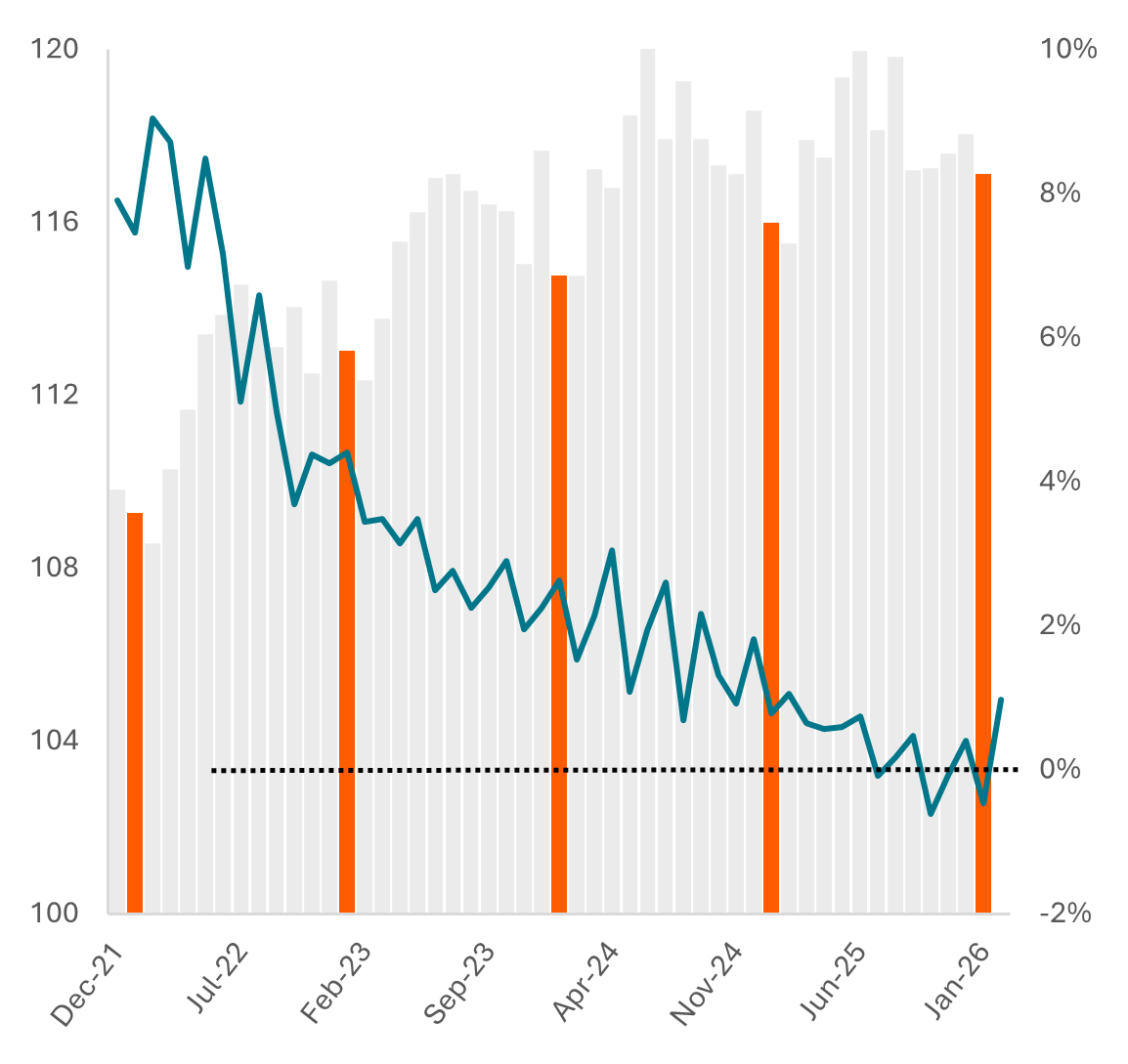
SMB job growth is already fragile. The workforce trend has slowed materially over recent years and crossed the zero-growth line multiple times in 2025, making SMB employment more sensitive to substitution pressures from automation and AI.
-
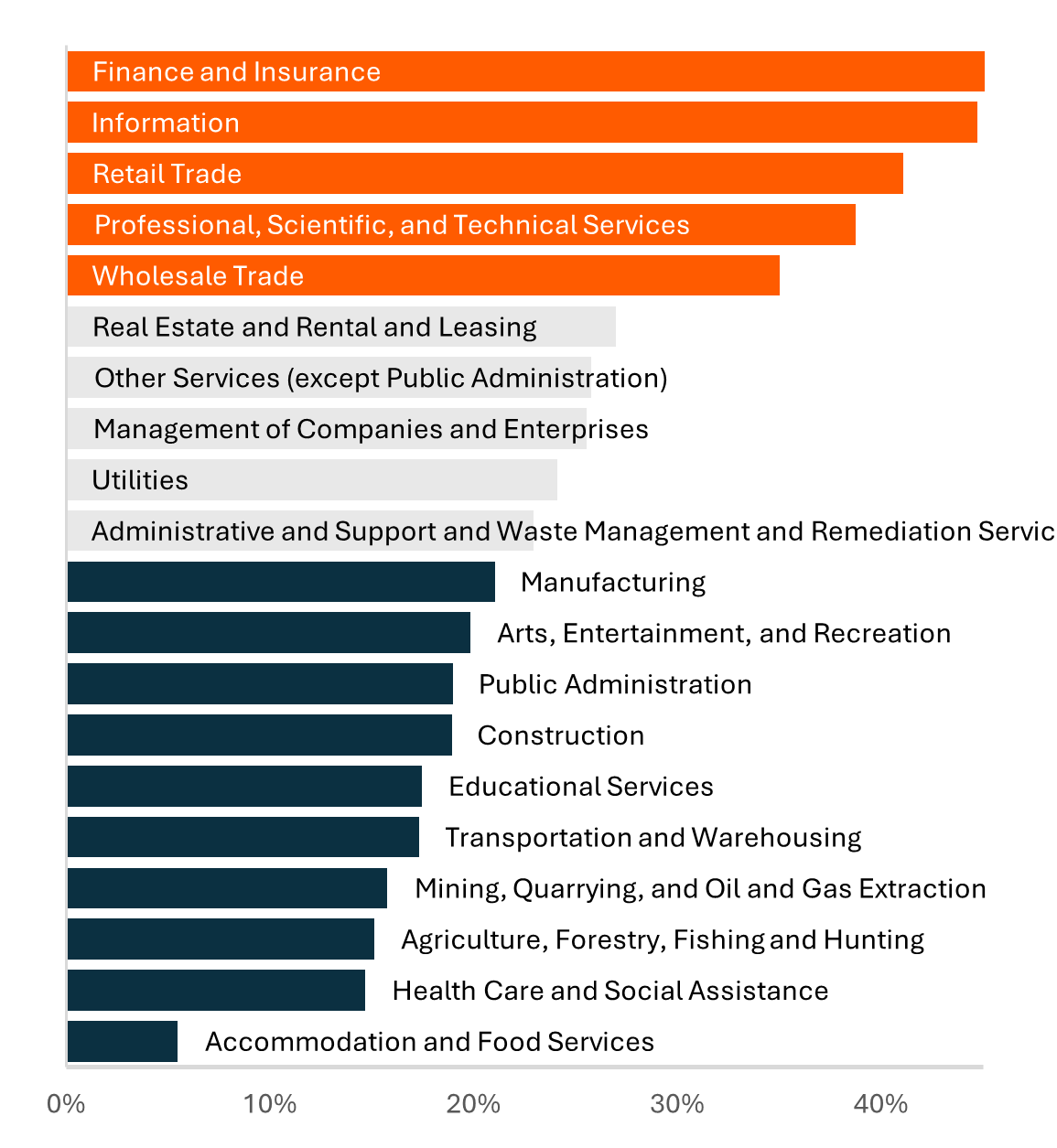
Exposure is broad, but not uniform. At-risk role families appear across every NAICS-2 sector, yet their concentration varies meaningfully by sector composition and the mix of office, customer, and knowledge-work tasks.
-
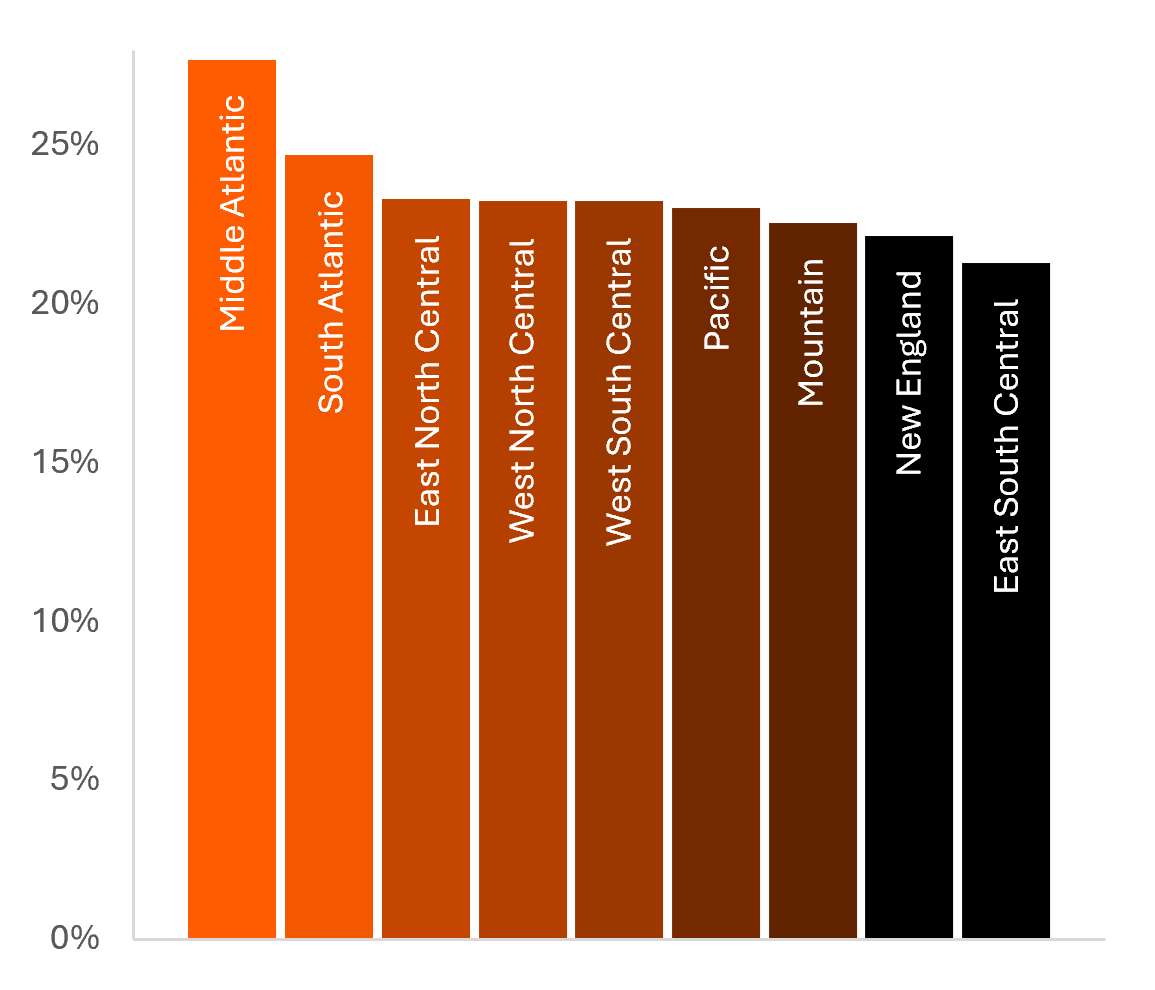
Geography matters, and the Middle Atlantic stands out. The Middle Atlantic has the highest share of SMB workers in at-risk roles, led by New Jersey, followed by New York and Pennsylvania, consistent with a higher concentration of information and professional service activity. Nebraska is a notable outlier across western states.
-
Net job endings within at-risk roles were concentrated in a small set of sectors in 2025. Among the larger sectors by employee count, Information and Manufacturing were the primary sectors showing net job ends within at-risk roles.
-
The job types showing losses are not uniformly declining everywhere. Titles such as software developers, editors, and other creative roles showed net job losses within certain sectors, but similar roles appear to be in demand in others, consistent with firms hiring these skill sets to drive productivity amid AI-enabled modernization.
AI Substitution Risks in the SMB Workforce
The SMB workforce has been on a trend of declining growth for several years to the point of hitting, and even dropping below, the zero-growth line multiple times in 2025. Against this backdrop of stagnating employment lurks the emerging threat of AI substitution. There have been recent articles1 covering large corporations announcing layoffs due to AI, but the SMB workforce is in a different position. AI adoption requires resources far scarcer within the SMB landscape than at the enterprise level, and while AI can "apply" to many tasks within SMB jobs, replacing people in smaller businesses is often more difficult as many jobs either bundle hard-to-automate work or are more physical in nature.
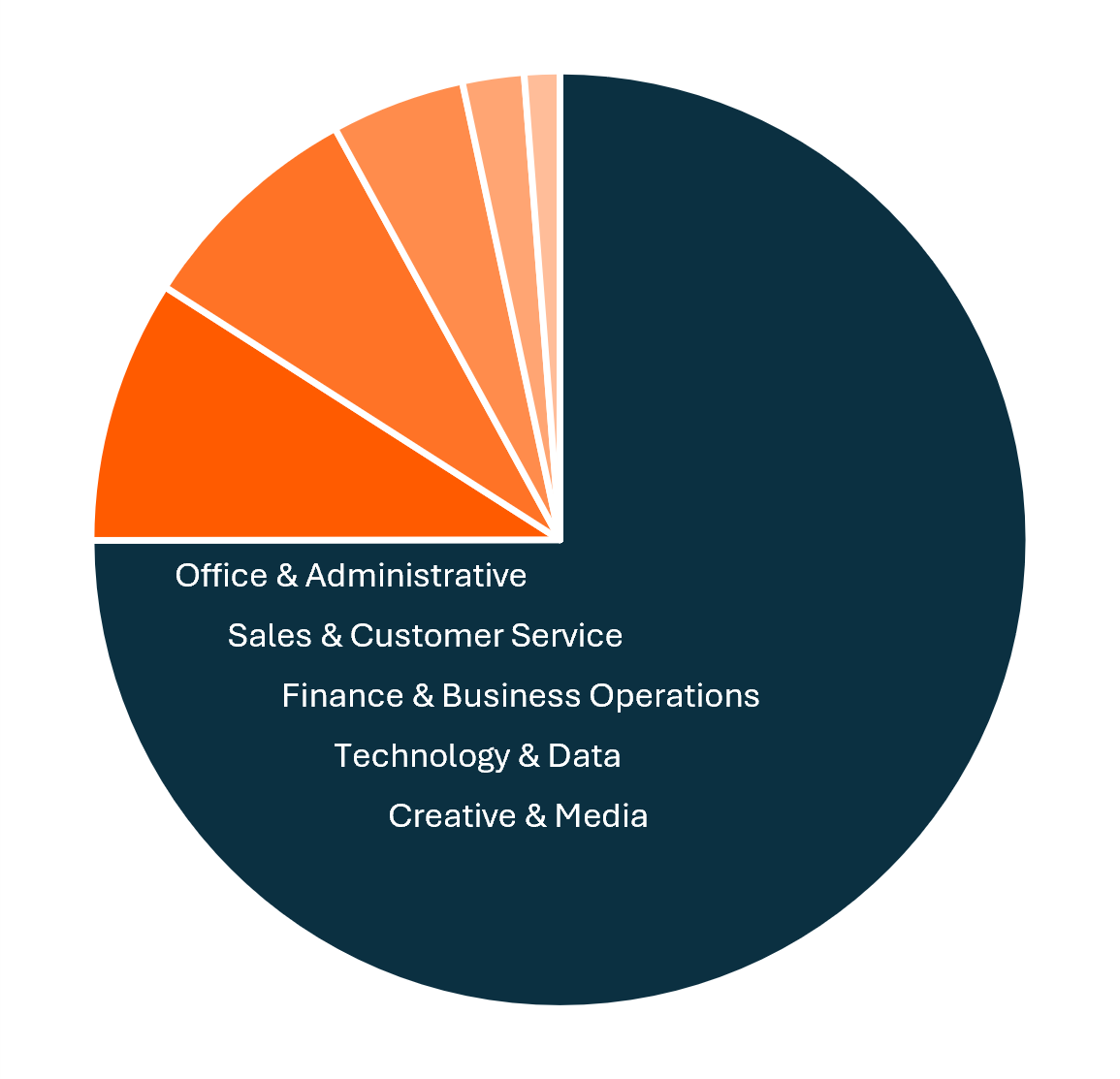
The goal of this content is to gain an understanding of the distribution of at-risk jobs within the SMB workforce, and where possible, to estimate job losses due to AI substitution across the broader workforce landscape. To understand where risks may be greatest, we've created an at-risk subset of roles within the SMB workforce cross referencing job titles in the Carbon Arc SMB data asset with occupations having high AI applicability according to a recent report from Microsoft Research.2
Exhibit 1: Monthly indexed SMB workforce (bars, left) and Y/Y change (line, right), January data in orange
Price: requires row-level block data access, available on request
Exhibit 2: SMB job role families, highlighted to show segments at elevated risk from generative AI adoption.
Price: requires row-level block data access, available on request
Exhibit 3: Concentration of at-risk role families within NAICS-2 sectors
Price: requires row-level block data access, available on request
Geographic Exposure to At-Risk Role Families
While it is more likely the SMB workforce will be impacted by AI at a more gradual rate than among larger entities, the job types at risks to workforce contraction will likely maintain similar demographic characteristics over time. For this reason, we illustrate the regional distribution of the most at-risk role families.
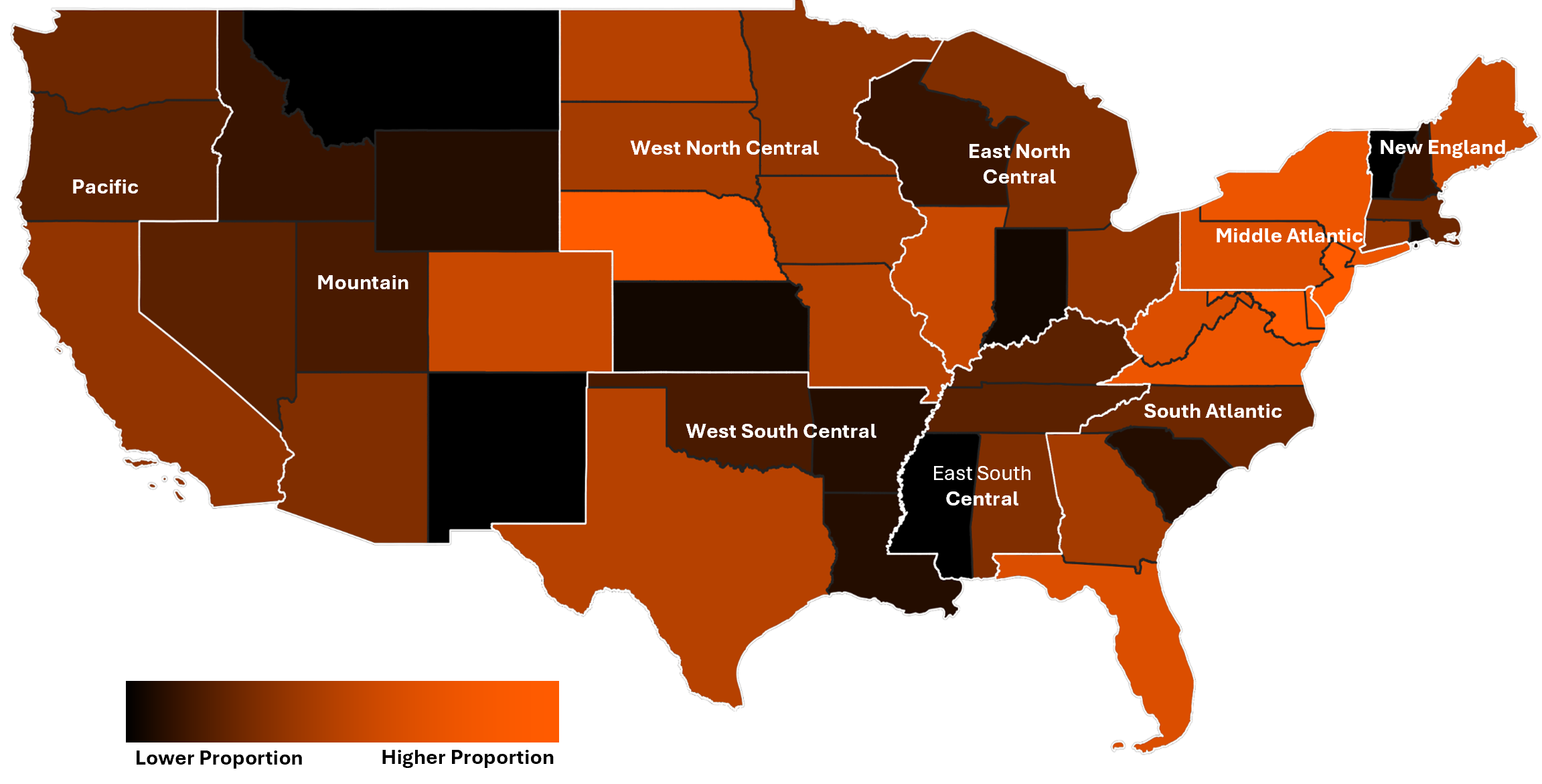
The Middle Atlantic division has by far the highest proportion of its SMB workforce within at-risk roles. New Jersey has the highest proportion, 31%, followed by New York and Pennsylvania with 27% and 26%, respectively. Most other regions do not have this universally elevated exposure, which on the east coast is clustered around major metropolitan locations. The most visible exception is Nebraska, which stands out from any state across western regions with a relatively larger proportion of its SMB workforce in the Finance and Insurance, and Professional, Scientific, and Technical Services sectors.
It's worth noting the relatively low proportion of at-risk roles in California, which seems counterintuitive given the Information sector's high concentration of these jobs. However, the highest AI-related influence within CA would most likely fall on large enterprises.
Exhibit 4: Proportion of SMB workforce in at-risk role family by census division, as of December 2025
Price: requires row-level block data access, available on request
Exhibit 5: Choropleth of states color-coded by proportion of at-risk role family in SMB workforce, as of December 2025, with census division segmentation in white
Price: requires row-level block data access, available on request
Where "At-Risk" Is Most At-Risk
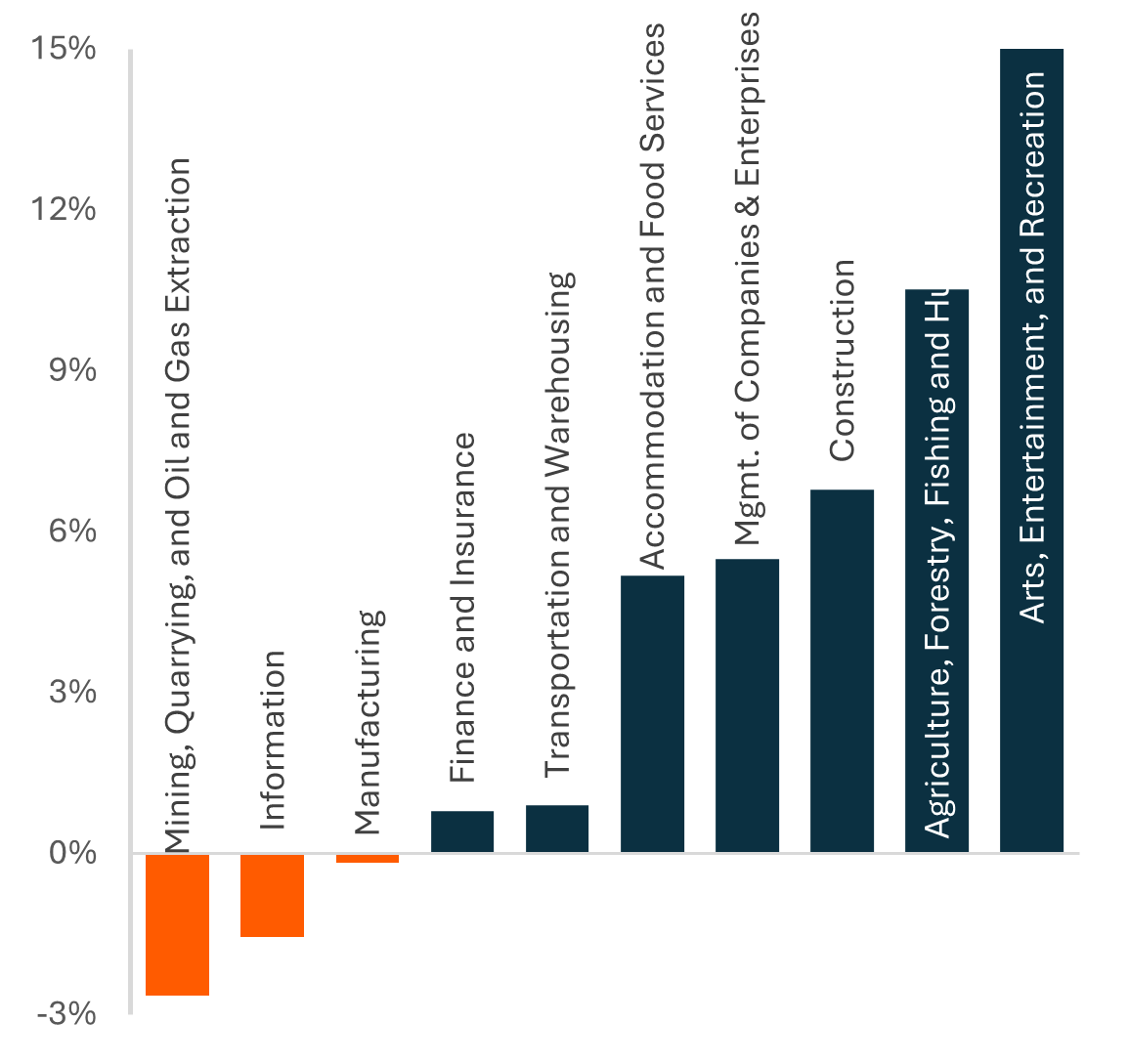
The at-risk role families sit across all NAICS-2 sectors but based on the net of job starts vs. job ends in 2025, there is noticeably different demand for the various job titles within the group. Only two large sectors (in terms of employee counts), Information and Manufacturing, had a net of job ends within at-risk roles last year. The losses within Information were far more meaningful than for both the Manufacturing and far smaller Mining & Extraction sectors. Conversely, there appeared plenty of demand for roles in the at-risk group in 2025 within the Arts, Entertainment, and Recreation sector, and to a lesser degree within Construction. Similar to the Mining sector, the Agriculture, Forestry & Fishing/Hunting sectors are relatively small, and the effects are not nearly as impactful.
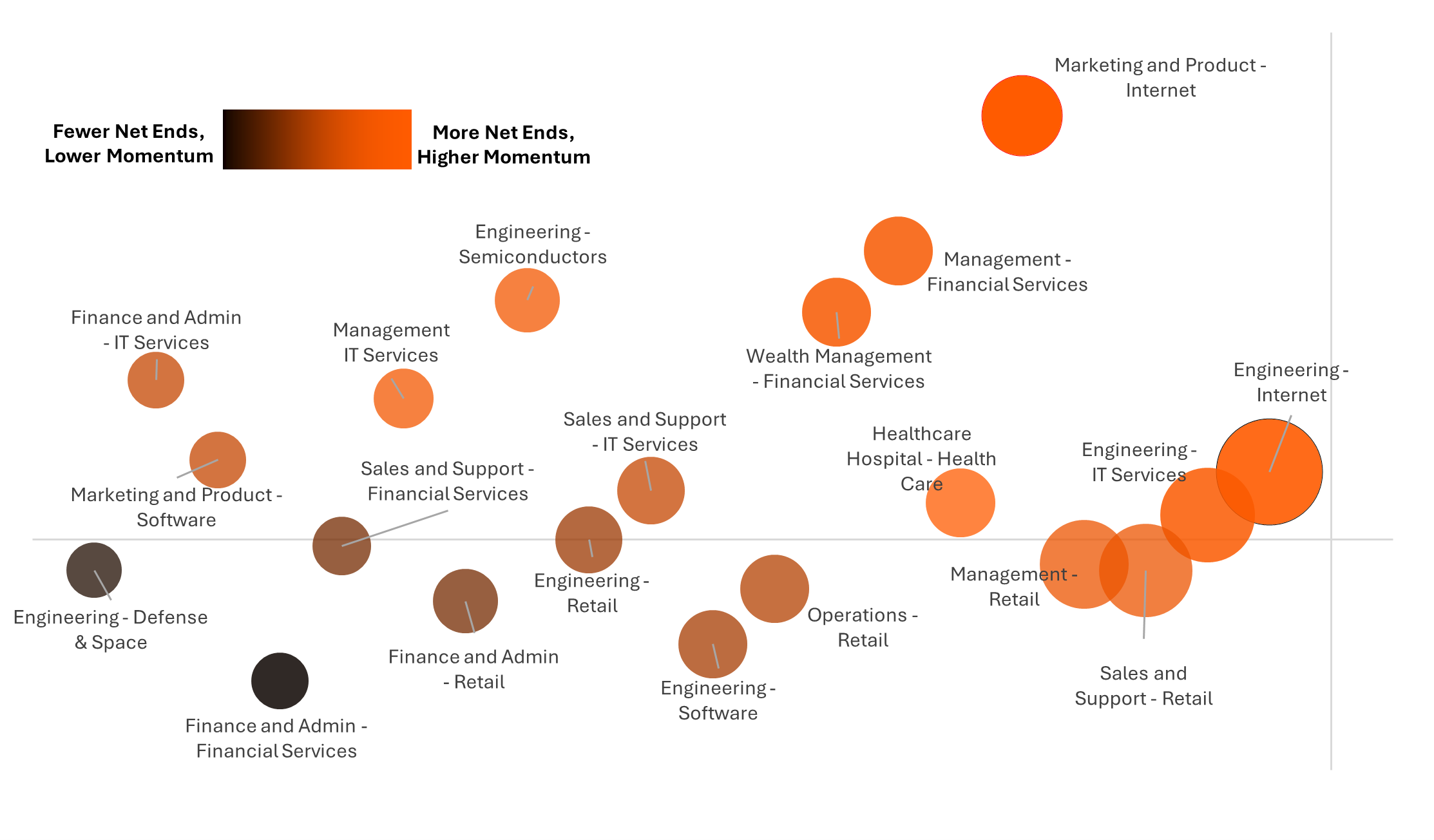
Below is a different look, beyond the SMB workforce, using Carbon Arc's Job Movements data asset to get a sense of where net job ends has been greatest. These are the 20 categories with the largest net job ends in 2025, and they are generally similar to those within the SMB workforce at-risk role families.
Exhibit 6: Proportion of SMB workforce in at-risk role family by census division, as of December 2025
Price: requires row-level block data access, available on request
Exhibit 7: Bottom 20 function-industry categories by net of job ends vs. job starts in 2025, ordered by rank (X-axis) and momentum up/down ranking scale since 2021 (Y-axis), bubbles scaled by net job ends in 2025
Price: requires row-level block data access, available on request
Deeper Dive: Information & Manufacturing
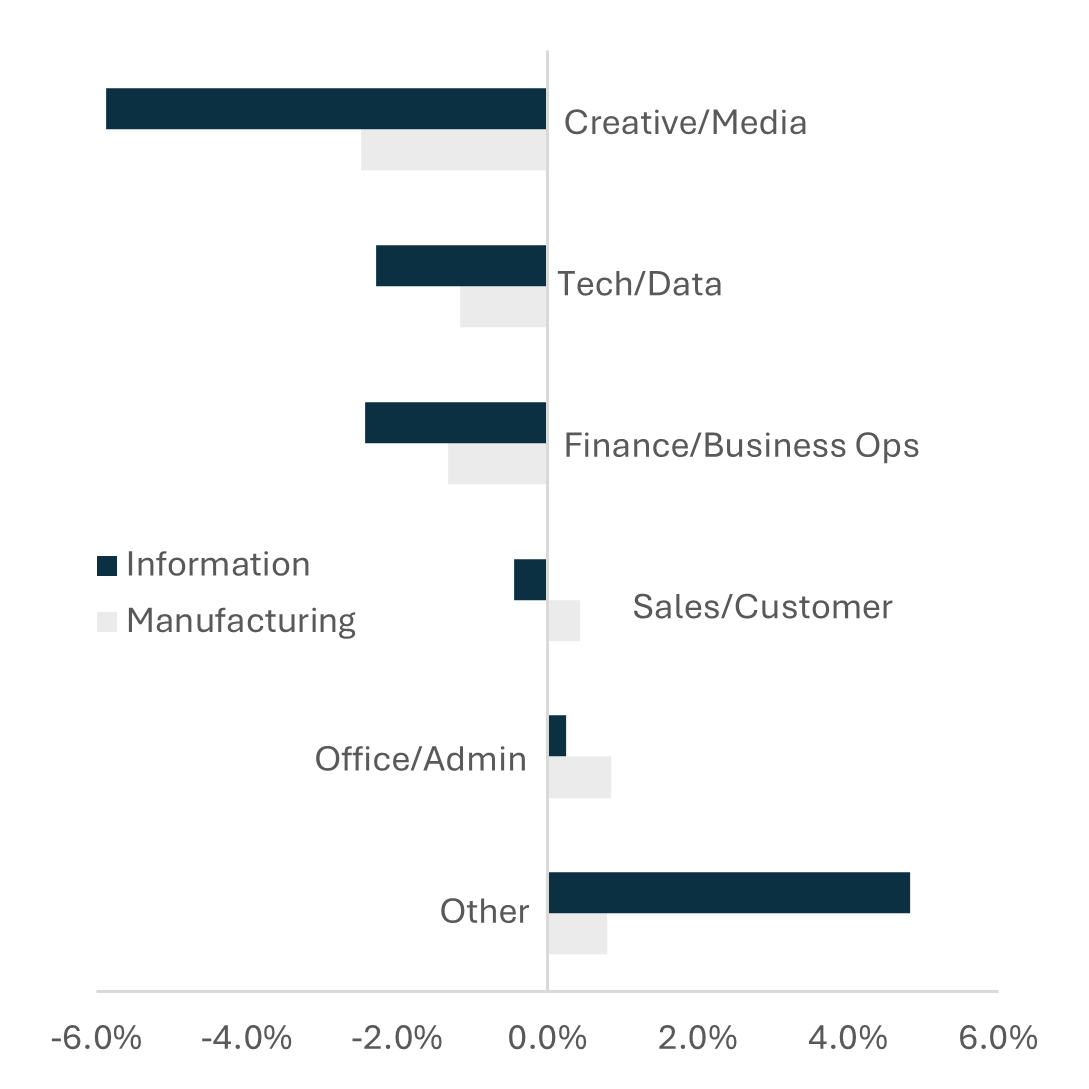
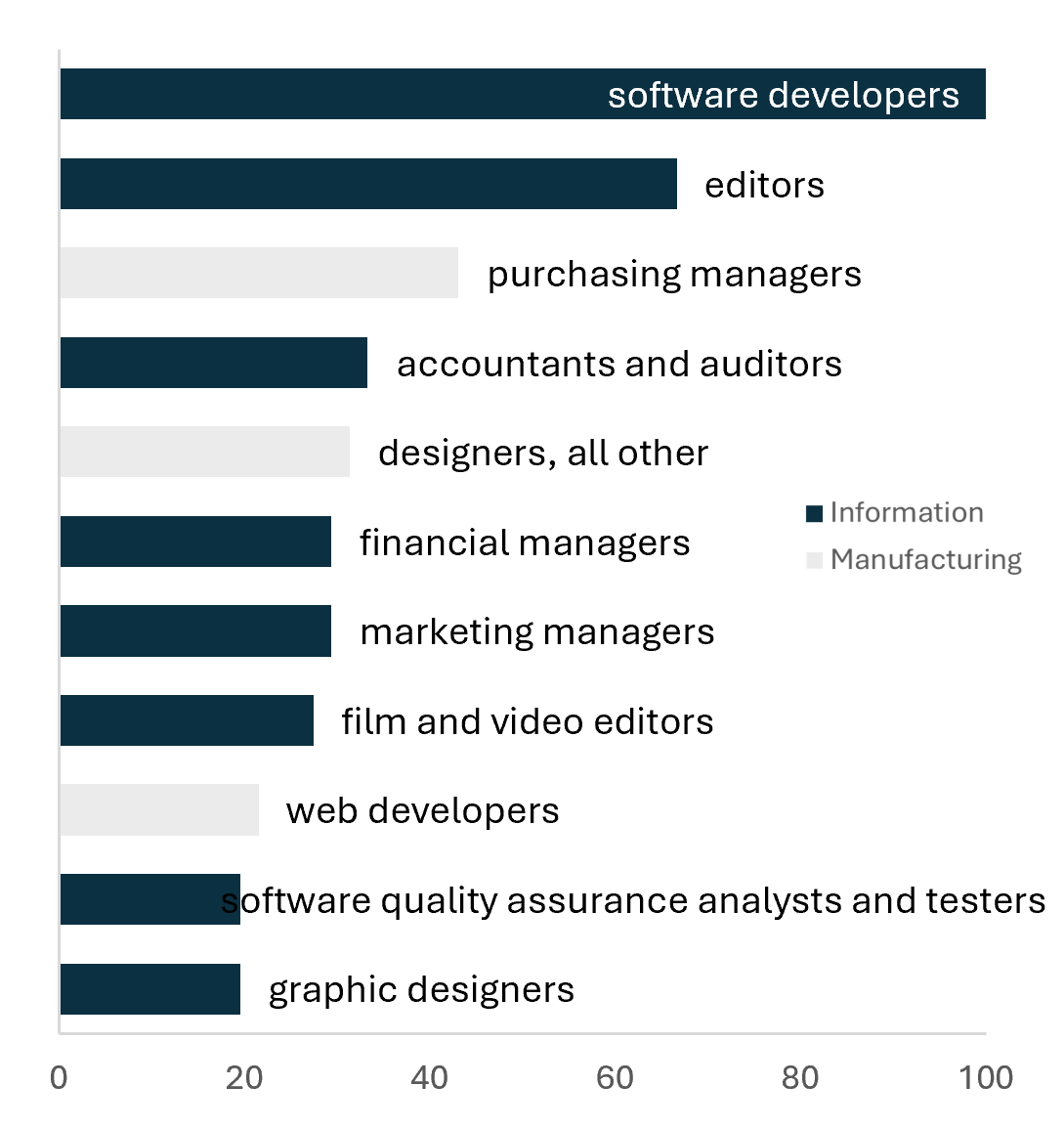
We can look more closely at the segments of the at-risk role families within these two larger sectors where net job ends were highest. Within both the Information and Manufacturing sectors, Creative/Media related job titles had the largest net job ends in 2025, but the job title with the largest overall losses was software developers within the Information sector, followed by editors within the same category.
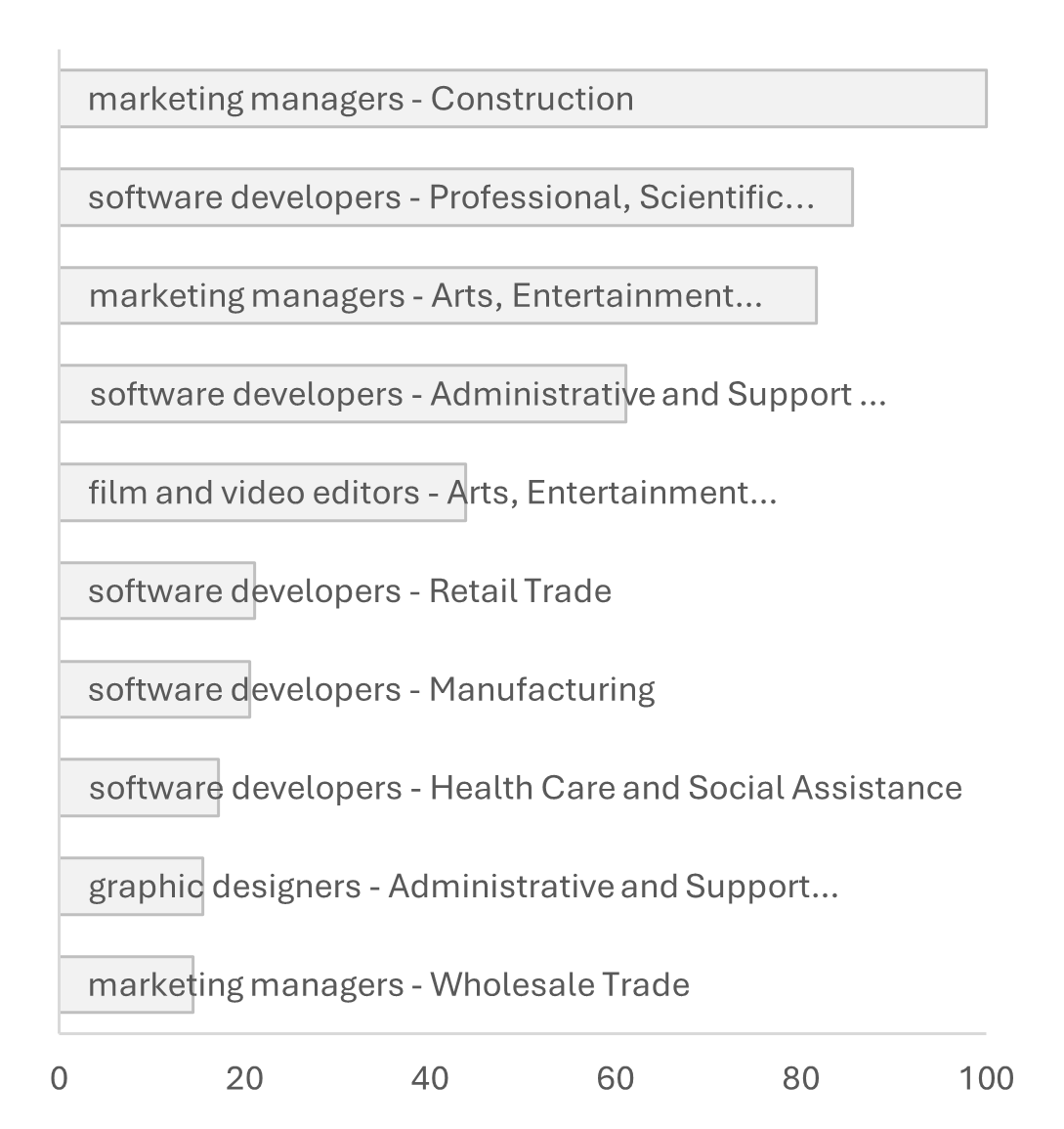
These same job titles, however, were in demand in several other sectors, perhaps where the roles within the sectors are greatly enhanced by the availability of AI, or the desire to incorporate AI into systems requiring skills common within these job titles. For example, it may be the case that software developers across the several non-Information sectors are being brought in due to the interest incorporating AI into the business. Or construction businesses are growing and marketing managers able to harness the value of generative AI are in demand. A similar theory could be applied to film and video editors within the Arts & Entertainment sector. The point being that the influence of AI on jobs within the SMB workforce will likely be very different in the near-term to what is emerging at the enterprise level.
Exhibit 8: Net job ends as % of unique workers by role families within the Information and Manufacturing sector in 2025
Price: requires row-level block data access, available on request
Exhibit 9: Net job ends as % of unique workers by role families within the SMB Information and Manufacturing sectors in 2025
Price: requires row-level block data access, available on request
Exhibit 10: Net job starts as % of unique workers by role families outside the SMB Information and Manufacturing sectors in 2025
Price: requires row-level block data access, available on request
References
Questions?
Contact us at support@carbonarc.co if you have any questions!
CARARC-20260217-SMBAI-0001